
Key Takeaways
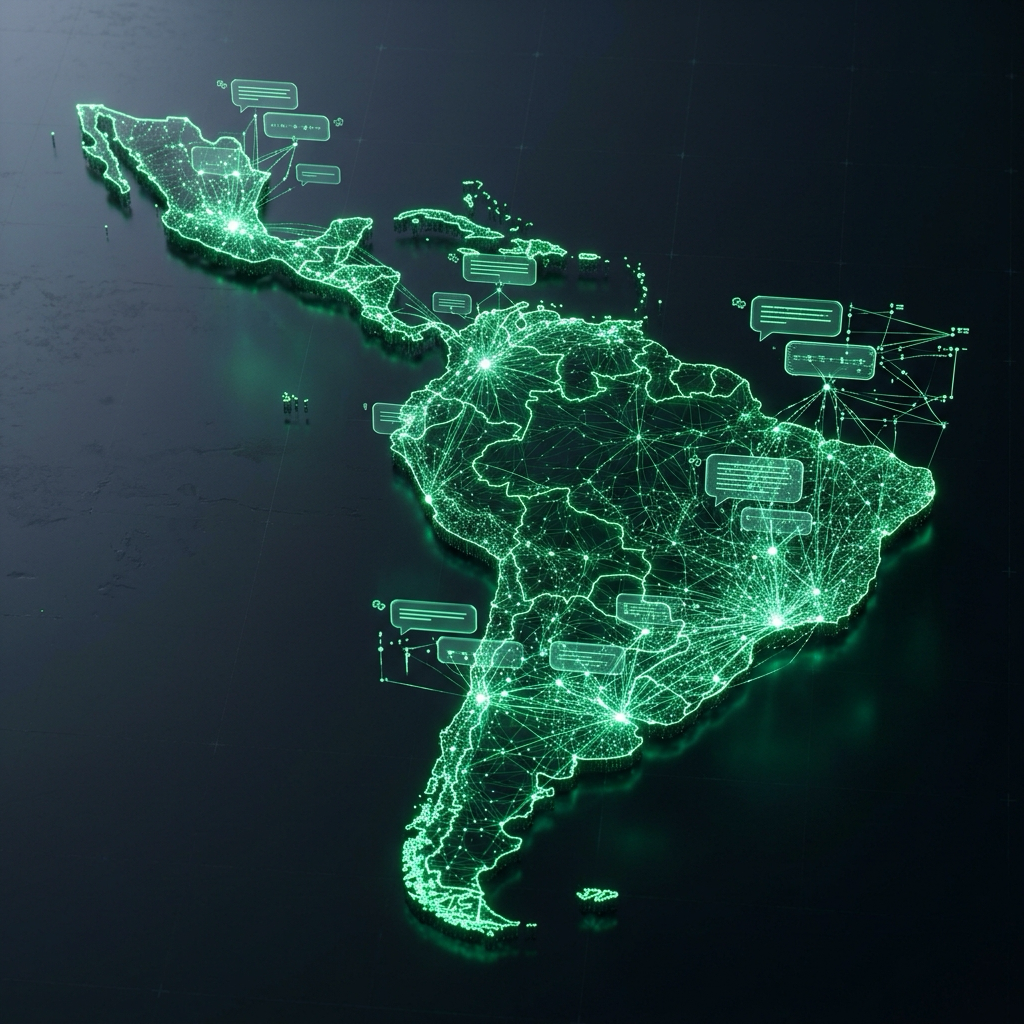
- By 2026, enterprise B2B buyers and consumers across North America, Europe, and Latin America rely on conversational AI rather than ten blue links.
- Generative Engine Optimization (GEO) requires semantic entity mapping, verified data density, and cross-border prompt localization.
- Planet Communities LLC delivers high-touch GEO & AEO consulting combining US corporate strategy with Latin American engineering via SciData.
The search landscape has undergone its most decisive transformation in twenty-five years. In 2026, B2B executives, technology leaders, and procurement directors no longer browse multiple search engine result pages. Instead, they prompt ChatGPT Search, Perplexity Pro, Google AI Overviews, and Claude for structured recommendations.
When a decision-maker asks:
“What are the most reliable enterprise data and AI consulting agencies operating across North America and Latin America?”
The generative engine does not output sponsored ads or ten blue links. It produces a concise, synthesized comparative answer featuring two or three vetted organizations, complete with direct footnotes and source citations.
If your enterprise has not been engineered for LLM entity recognition, your brand is completely absent from that buying conversation. This paradigm shift is governed by two complementary disciplines: GEO (Generative Engine Optimization) and AEO (Answer Engine Optimization).
Why Traditional SEO Fails in Generative Search
For decades, digital marketing agencies focused on inflating keyword density and amassing low-quality backlinks. In the era of Retrieval-Augmented Generation (RAG) and foundational LLMs, those tactics are obsolete.
Generative models determine citations based on fundamentally different principles:
- Vector Entity Mapping: LLMs interpret concepts as vector embeddings rather than isolated strings. If your brand entity is ambiguous or lacks explicit connections in Wikidata and Schema.org graphs, models default to better-defined competitors.
- Information Gain & Citation Density: Answer engines like Perplexity prioritize original data points, proprietary research, and concise Bottom-Line-Up-Front (BLUF) formatting over long-form keyword filler.
- Cross-Border and Linguistic Nuances: Brand authority is contextual. A prompt executed in English from New York or London requires different semantic validation than an equivalent inquiry executed in Spanish across Mexico, Colombia, or Argentina. AI search engines synthesize multi-lingual sources to form holistic recommendations.
The 4-Pillar Cross-Border GEO Framework
At Planet Communities, we deploy an enterprise-grade technical framework designed for multinational brands and cross-border leaders:
1. GEO Audit & LLM Citation Baseline
We benchmark your company’s visibility across hundreds of conversational prompts across GPT-4o, Claude 3.5 Sonnet, Perplexity, and Gemini. We uncover hallucination risks, competitor displacement, and the specific third-party publications shaping the model’s worldview of your category.
2. Semantic Architecture & Knowledge Graph Disambiguation
We implement comprehensive JSON-LD schemas (Organization, Service, AboutPage, ItemOffered, and areaServed) mapped directly to canonical Wikidata identifiers. This removes all ambiguity, ensuring AI crawlers understand your exact corporate taxonomy, subsidiaries, and service capabilities.
3. High-Density AEO (Answer Engine Optimization)
We overhaul core digital assets with verified question-answer blocks, executive summaries (TL;DR), and factual comparison matrices. This content structure is engineered for instant zero-click extraction and conversational citation synthesis.
4. Cross-Border Multi-Market Localization & Bot Accessibility
We ensure seamless access for GPTBot, PerplexityBot, ClaudeBot, and Google-Extended. By pairing clean hreflang hygiene with /llms.txt specifications and localized authority building across both the US and Latin America (via our engineering partner SciData), we ensure consistent recommendation across languages and regions.
Done-For-You Consulting vs. SaaS Tools
Attempting to solve AI visibility with automated content generators almost always results in search engine penalties and zero AI citations. Generative engines are trained to discard repetitive, synthetic text.
Earning citations in ChatGPT and Perplexity requires strategic semantic engineering and senior consulting:
- Defining the precise factual propositions associated with your brand entity.
- Establishing authoritative digital PR relationships with tier-one media sources monitored by AI retrieval engines.
- Continuously auditing and improving your brand’s algorithmic sentiment.
To address this challenge, Planet Communities LLC provides an end-to-end GEO & AEO with AI Consulting Service for enterprise clients seeking category leadership across the United States, Europe, and Latin America.
Ready to secure your brand’s presence in conversational search? Schedule a strategic consultation with our team.
Frequently Asked Questions
- What is the difference between traditional SEO and cross-border GEO?
- Traditional SEO targeted keyword rankings within regional Google search result pages. Cross-Border Generative Engine Optimization (GEO) structures an organization's digital footprint so generative LLMs (ChatGPT, Perplexity, Gemini, Claude) synthesize, recommend, and cite the brand in conversational queries worldwide, accounting for regional dialects, local entities, and multi-country market authority.
- How do LLMs decide which brands to cite in multi-region queries?
- LLMs evaluate three key factors: entity clarity through Schema.org and knowledge graphs, verified information gain from high-authority regional citations, and technical crawlability via dedicated AI ingestion protocols like /llms.txt.
- How can enterprise brands start a GEO engagement?
- Through Planet Communities' specialized GEO & AEO consulting practice, offering end-to-end Done-For-You optimization for US, European, and Latin American enterprise markets.